
Peppermint for Bloating: A Natural Approach to Digestive Comfort
Bloating can leave your stomach feeling tight and uncomfortable, sometimes after an ordinary meal. When it happens regularly, it is natural to look for simple ways to feel better.
Peppermint has a long history of use in traditional digestive remedies. Its fresh aroma makes it a popular ingredient in herbal infusions, while peppermint oil is also used in certain medicinal products for digestive symptoms.
However, there is an important difference between drinking peppermint tea and taking peppermint oil capsules. Understanding that distinction helps you make more informed choices about natural digestive care.
What Science Says About Peppermint
Peppermint contains compounds such as menthol. Medicinal peppermint oil can relax smooth muscle in the bowel, which helps explain why certain preparations are used for intestinal cramps and symptoms associated with irritable bowel syndrome (IBS).
The UK National Health Service (NHS) recognises peppermint oil capsules as an option for relieving stomach cramps, bloating, and flatulence, particularly in people with IBS.
That does not mean peppermint tea has been shown to produce the same benefits. Research on medicinal peppermint oil cannot automatically be applied to a homemade infusion, because the concentration and formulation are different.
Bloating also has many possible causes, including eating quickly, swallowing air, constipation, food intolerances, and digestive conditions. A herbal drink may be comforting, but persistent symptoms deserve closer attention.
How to Prepare Fresh Peppermint Tea
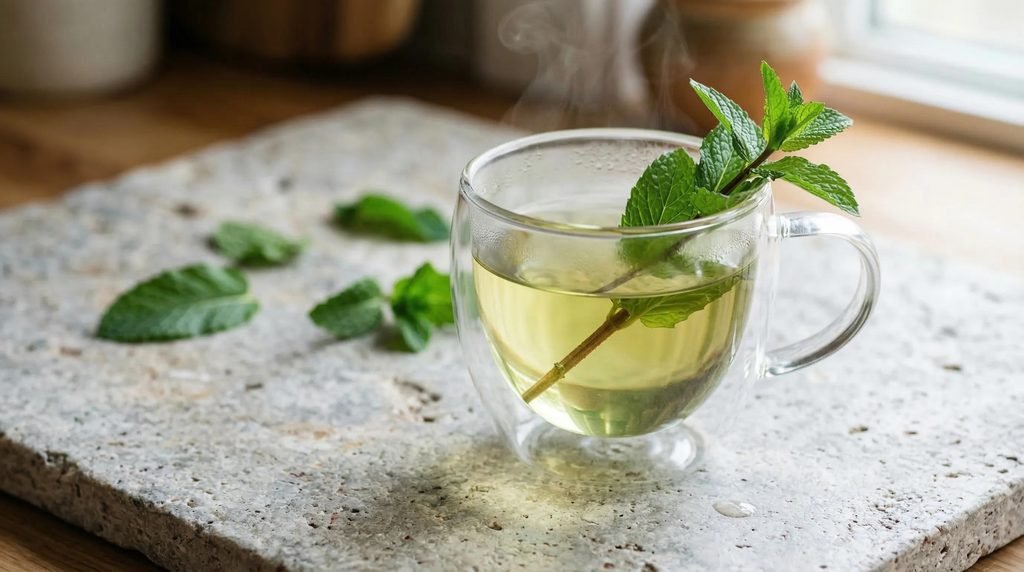
This simple infusion is a caffeine-free drink for everyday enjoyment. Its effectiveness for treating bloating has not been established to the same degree as medicinal peppermint oil capsules.
Ingredients
- 6–8 fresh peppermint leaves
- 250 ml of hot water
- A slice of lemon, optional
Method
- Rinse the peppermint leaves under clean running water.
- Place them in a heat-resistant mug.
- Pour hot water over the leaves.
- Cover and steep for approximately 5–7 minutes.
- Strain the leaves and allow the drink to cool slightly before drinking.
Avoid adding concentrated peppermint essential oil to the drink. Essential oils are highly concentrated products and should not be swallowed casually as a home remedy.
When Peppermint May Not Be a Good Choice
Peppermint can cause or aggravate heartburn and indigestion in some people. If you have gastroesophageal reflux or notice that mint makes your symptoms worse, it may be better to avoid it.
Medicinal peppermint oil capsules have additional precautions and can interact with some medicines. The NHS advises checking with a pharmacist or healthcare professional before using them if you have relevant medical conditions or take other medication.
Do not assume that a product labelled natural is automatically safe for everyone. Herbal preparations vary, and supplements are not interchangeable with ordinary foods or drinks.
Everyday Habits That May Help With Bloating
Alongside a comfortable warm drink, a few practical habits may be worth trying. Eat slowly, chew food thoroughly, and consider whether fizzy drinks or particular foods consistently trigger symptoms. Regular gentle movement, such as a walk after a meal, may also support normal digestion.
Keep a simple food and symptom diary if bloating occurs frequently. It can help identify patterns without unnecessarily eliminating entire food groups.
Speak with a healthcare professional if bloating persists or repeatedly returns. Seek prompt medical assessment if it occurs alongside severe abdominal pain, vomiting, blood in the stool, unexplained weight loss, or an inability to pass stool or gas.
Choosing Natural Remedies Wisely
Peppermint is a useful example of why evidence matters in natural wellness. Medicinal peppermint oil has recognised uses for certain digestive symptoms, while the benefits of peppermint tea for bloating remain less certain.
A freshly prepared infusion can still be an enjoyable part of a daily routine. The key is to treat it as a beverage rather than a guaranteed treatment, pay attention to your symptoms, and seek professional advice when digestive discomfort becomes persistent.